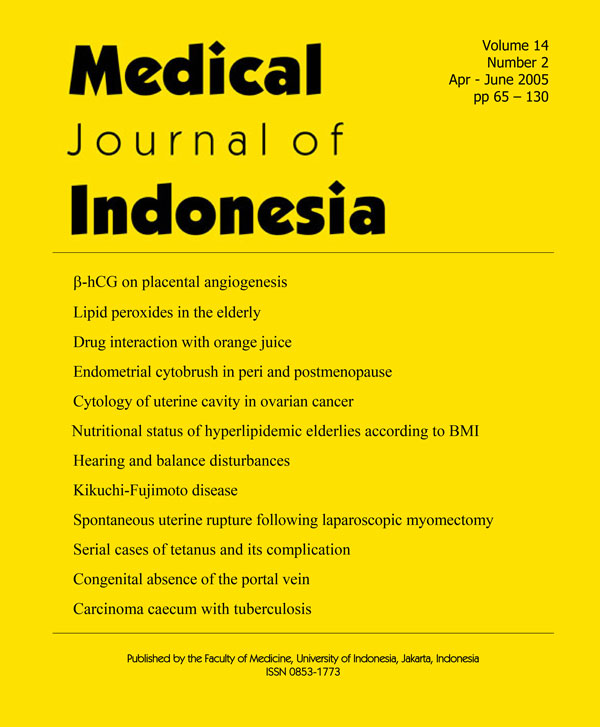
The impact of β-hCG on placental angiogenesis in pre-eclampsia
DOI:
https://doi.org/10.13181/mji.v14i2.175Keywords:
angiogenesis, β-hCG, plocenta, pre-eclampsiaAbstract
Numerous factors, such as VEGF and intra-placental oxygenation, can influence placental angiogenic activity. Early in the normal gestation period, β-hCG enhance VEGF activity to induce angiogenesis. The aims of this study were to identify the correlation between β-hCG concentration in placental culture and placental angiogenic activity in pre-eclampsia. Ten placenta samples from women with pre-eclampsia and l0 from controls (normal pregnancy) were collected. All subjects agreed to participate in this study and signed an informed consent form. β-hCG concentration in supernatant of placental culture was measured by Microparticle Enzyme Immunoassay (MEIA) and placental angiogenic activity was measured by endothelial cell migration toward placental explant (score 0-4). The results showed that the median score of placental angiogenic activity in pre-eclampsia was significantly higher than in normal pregnancy (p<0.05). Concentration of β-ahCG in pre-eclampsia was significantly higher than in normal pregnancy (p<0.001). hCG concentration in placental culture was positively correlated to placental angiogenic activity both in pre-eclampsia (r=+0.50) and in normal pregnancy (r=+0.57). Althouglt the correlations were weak, β-hCG is considered one of the factors that influence placental angiogenic activity. (Med J Indones 2005; 14: 67-70)
Keyvords: angiogenesis, β-hCG, plocenta, pre-eclampsia
Downloads
Downloads
Published
How to Cite
Issue
Section
License
Detailed information on the copyright and licensing policy is available under the copyright section.